

Enterprise leaders are no longer debating whether artificial intelligence is indispensable. The debate has been settled.
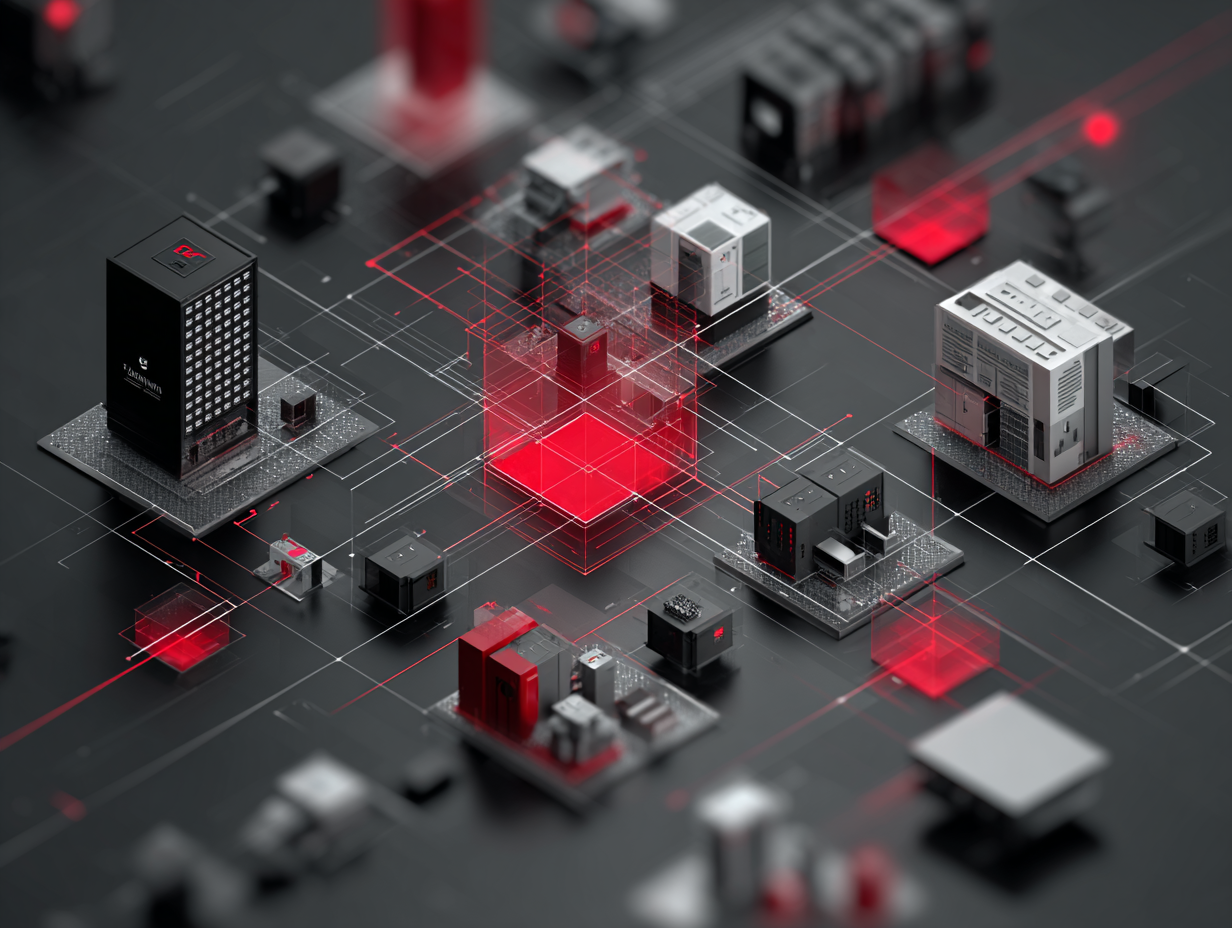
Enterprise leaders are no longer debating whether artificial intelligence is indispensable. The debate has been settled. The more pressing concern is whether the infrastructure supporting those initiatives can perform reliably while remaining secure under real operational pressure. Many AI programs launch with confidence and slow down quietly once production begins. When that happens, the network, not the model, is the issue.
An AI-ready secure network is the control plane that determines whether AI systems scale safely, remain observable, and stay governable over time. For organizations adopting Cisco Secure AI Factory with NVIDIA, network design becomes a defining factor in both performance and risk.
AI workloads behave differently from traditional enterprise applications. Training, fine-tuning, and large-scale inference require constant and synchronized data exchange across many processors. Even small amounts of packet loss or congestion can disrupt jobs, extend runtimes, and inflate costs. When visibility breaks down at the same time, security exposure grows.
The hardest part of enterprise AI is making development software, data pipelines, accelerated compute, networking, and security operate together as a single, reliable platform once systems are live. From a cybersecurity standpoint, this observation is crucial because integration gaps are where risks often go undetected. As AI moves into the center of every industry, enterprises need confidence across the full AI lifecycle, not just faster performance. That confidence is enforced largely through the network, where data moves, identities are validated, and policy decisions occur continuously.
Cisco Secure AI Factory with NVIDIA provides a validated foundation for building AI infrastructure that scales securely. Cisco positions the Secure AI Factory as a full-stack solution that integrates compute, networking, security, and observability for AI workloads across data center, edge, and hybrid environments.
Security is embedded at every layer. Cisco AI Defense provides protection for AI models and applications, while Cisco Hypershield extends enforcement into the network fabric itself. This approach ensures that protection follows workloads as they move, rather than relying on fixed perimeter controls.
For enterprises, this architecture reduces complexity while preserving flexibility. Leaders can deploy AI with confidence, knowing that performance and protection evolve together.
Scalability becomes manageable when infrastructure is modular. Cisco AI PODs serve as pre-validated building blocks that support a wide range of AI use cases, including edge processing, model training, inference, and RAG pipelines.
Each AI POD combines Cisco UCS servers with NVIDIA GPUs, high-performance networking, integrated security, and validated storage options. This modularity enables organizations to expand AI capacity incrementally, without redesigning the underlying architecture.
Cisco highlights that AI PODs support diverse deployment models, from on-premises environments to cloud-managed infrastructure, enabling enterprises to align AI growth with operational and regulatory requirements.
AI traffic patterns demand a modern Ethernet fabric that can handle heavy east-west and north-south flows without loss or excessive delay. Cisco Nexus switches and Cisco Nexus Hyperfabric AI enable a high-bandwidth, low-latency network designed specifically for AI workloads.
Cisco Live guidance underscores that training accuracy and job completion times depend on stable, non-blocking connectivity. Lossless Ethernet reduces retransmissions, improves synchronization between GPUs, and ensures predictable performance under load.
Visibility and control are as important as raw throughput. Cisco Nexus Dashboard provides unified network management across AI infrastructure, delivering centralized operations, automation, and end-to-end visibility.
From a governance perspective, this centralized control plane simplifies policy enforcement, accelerates troubleshooting, and reduces operational risk. Executives gain clearer insight into how AI workloads consume resources and where constraints emerge.
Traditional security models struggle in AI environments because threats often target internal systems rather than perimeter boundaries. Cisco Secure AI Factory addresses this by embedding security directly into the network fabric.
Cisco Hybrid Mesh Firewall, Smart Switches powered by Hypershield, and Cisco AI Defense work together to protect AI models, workloads, and infrastructure. This layered approach enables inspection and enforcement closer to where data is processed, reducing blind spots.
NTT DATA describes zero-trust as continuous verification of every user, device, and application interaction.⁵ In AI environments, this model is essential. Model endpoints, orchestration platforms, and data pipelines must authenticate and authorize every request, regardless of location.
Segmentation aligned to the AI lifecycle further limits lateral movement and reduces blast radius in the event of compromise.
AI workloads place unique demands on storage systems. High-throughput access, low latency, and scalability are critical for training and inference pipelines.
Cisco Secure AI Factory incorporates validated designs with storage partners such as NetApp, Pure Storage, and VAST Data. These integrations ensure that storage performance keeps pace with accelerated compute and networking, without introducing bottlenecks.
By relying on validated partnerships, enterprises reduce deployment risk and avoid costly performance mismatches.
Container orchestration is central to modern AI operations. Platforms such as Red Hat OpenShift and Nutanix Kubernetes Platform provide the foundation for managing AI workloads at scale.
These platforms enable consistent deployment, lifecycle management, and isolation of AI services. When integrated with Cisco Secure AI Factory, Kubernetes orchestration aligns compute, networking, and security policies, improving operational consistency.
From a security standpoint, standardized orchestration reduces configuration drift and simplifies compliance enforcement.
Not every organization adopts AI in the same way. Cisco Secure AI Factory supports flexible deployment options to reflect that reality.
Enterprises can build their own Secure AI Factory by combining Cisco infrastructure with partner technologies, or they can deploy turnkey AI PODs with on-premises or cloud-managed networking. This flexibility allows organizations to meet data sovereignty, latency, and regulatory requirements without compromising architectural integrity.
AI infrastructure must adapt as models grow, workloads diversify, and threat landscapes evolve. Cisco’s AI-ready infrastructure validated designs provide a path for future expansion while maintaining security and performance.
Cisco’s evolving security portfolio, including AI Defense and Hypershield, ensures that protection mechanisms scale alongside AI adoption. This forward-looking approach allows enterprises to invest confidently, knowing that today’s design will not become tomorrow’s constraint.
AI initiatives succeed when speed and trust advance together. The network is the layer that balances those forces every day, shaping performance, security, and governance quietly but decisively. Cisco Secure AI Factory with NVIDIA offers a validated direction for enterprises pursuing AI at scale. The outcome, however, depends on how deliberately the network is designed and operated.
Organizations that invest early in AI-ready secure networking gain more than efficiency. They gain predictability, control, and the confidence to scale AI where it matters most.
Explore our latest insights on AI, cybersecurity, and data center innovation. Discover how SecurView delivers scalable, Cisco-integrated solutions for complex enterprise needs.

![[background image] image of an innovation lab (for an ai developer tools).](https://cdn.prod.website-files.com/69835fe30bf38b9637e73850/6a46644a4c169eeeae4a47bd_aaaa.jpg)
![[background image] image of an innovation lab (for an ai developer tools).](https://cdn.prod.website-files.com/69835fe30bf38b9637e73850/6a4660b88fcd6b3708698812_JJ.png)
![[background image] image of an innovation lab (for an ai developer tools).](https://cdn.prod.website-files.com/69835fe30bf38b9637e73850/6a33ca3574b66de6e5d61431_l%20(2).png)