


Cisco Identity Services Engine has become a central platform for identity-based network access control. Organizations use it to verify users and devices before granting access to critical resources. However, deploying Cisco ISE requires careful planning. Architecture design, node roles, and deployment models determine how effectively the system supports security and operations.
A well-planned Cisco ISE deployment allows enterprises to scale identity-based access control across wired, wireless, and remote environments. It also supports high availability and centralized policy management.
This Cisco ISE deployment guide explains how the architecture works, what deployment models exist, and which practices help organizations implement Cisco ISE successfully.
Cisco ISE deployment and architecture are crucial because they determine the reliability of your security posture. A poorly designed deployment creates latency, introduces single points of failure, and complicates audit compliance. Conversely, a well-orchestrated Cisco ISE architecture ensures high availability, facilitates seamless session failover, and provides the visibility necessary to mitigate lateral movement during a breach. According to IBM’s 2025 Cost of a Data Breach report, organizations with robust access governance reduced breach costs by 9%. For executives, investing in a sound deployment model is a direct investment in business continuity and risk reduction.
Several architectural capabilities make Cisco ISE deployment critical for enterprise security. Let us discuss a few of these architectural capabilities in detail:
Cisco ISE integrates authentication, authorization, accounting, posture validation, and endpoint profiling into one platform. These functions allow organizations to enforce identity-based access policies across the entire network infrastructure.
Cisco ISE collects contextual information, such as user role, device type, location, and access history. This information lets the system grant precise access rights based on business policy.
Cisco ISE architecture supports both standalone and distributed deployments. Organizations can scale the platform by adding nodes that perform specialized functions such as policy evaluation or monitoring.
Cisco ISE supports the identity-driven security model used in Zero Trust architecture. Access decisions depend on verified identity and device posture rather than network location.
For enterprise leaders, these capabilities translate into robust security governance, stronger compliance reporting, and reduced risk of unauthorized access.
Understanding the architecture behind these capabilities is the next step.
Cisco ISE operates through a modular system of roles known as personas. This separation of duties allows the system to scale horizontally, ensuring that administrative tasks do not interfere with real-time authentication traffic. In short, Cisco ISE architecture relies on several building blocks that work together to evaluate identity, enforce policy, and monitor network activity.
These building blocks include nodes, personas, policy components, and endpoints.
Every Cisco ISE deployment relies on four primary personas that define the functionality of each node in the network:
Deployment Models and Node Sizing
The scale of your organization determines the optimal deployment model. Cisco provides specific sizing guidelines to ensure performance remains stable under heavy loads
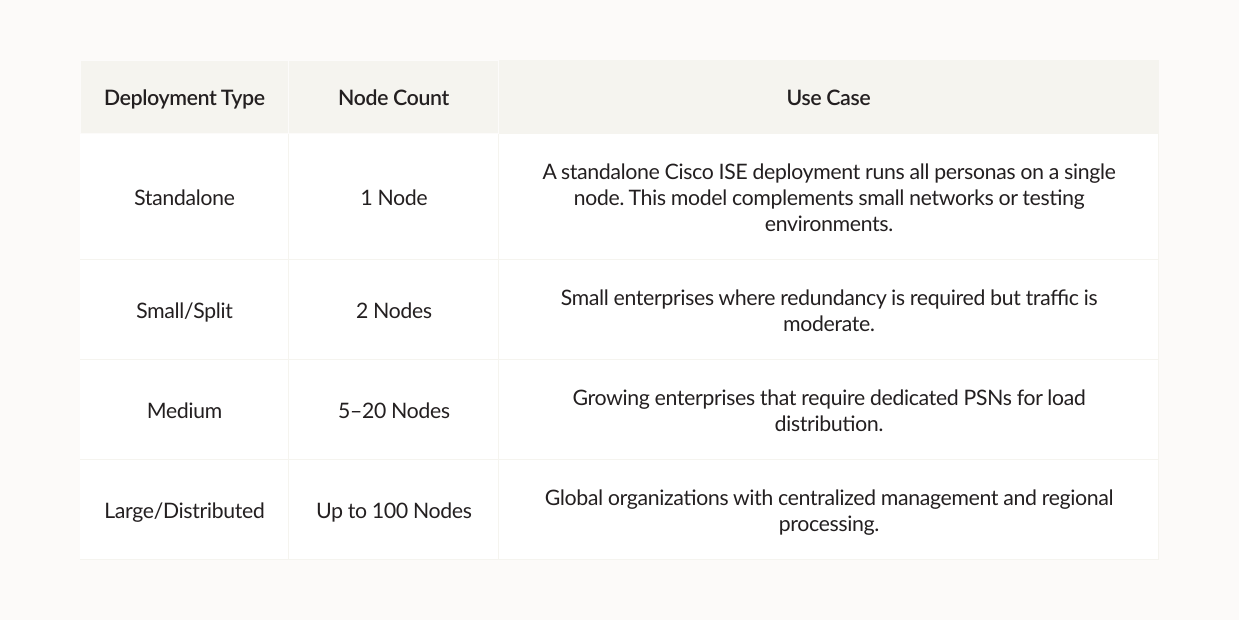
In a distributed model, administration and monitoring are centralized at the primary site, while Policy Service nodes are placed as close to the users as possible to reduce latency.
Successfully deploying Cisco ISE requires a methodical approach that prioritizes network stability alongside security enforcement. High-performing organizations follow these core principles.
One of the most frequent mistakes in a Cisco ISE deployment guide is rushing to "closed mode." You should begin by operating in "Monitor Mode." This allows you to profile every device and user on the network without blocking traffic. Once you have a reliable inventory of your endpoints, you can graduate to "Low Impact Mode" and eventually "Closed Mode."
Node sizing for Cisco ISE must account for peak authentication periods, such as Monday mornings when all employees log in simultaneously. Ensure that your PSNs are distributed geographically. Placing nodes near AAA clients reduces the risk of access loss during a Wide Area Network (WAN) failure.
Do not treat Cisco ISE as an isolated island. Use the pxGrid persona to share identity context with your Security Operations Center (SOC). When a firewall detects a threat, it can signal Cisco ISE to quarantine the infected device. This cross-domain orchestration is the hallmark of a mature Zero Trust architecture.
Even with the best tools, implementation can be challenging. Avoiding these common mistakes will save your team months of remediation:
Cisco ISE is an identity project as much as a networking one. If the identity team and the network team do not collaborate, the deployment will likely stall. Policy quality depends on accurate Active Directory or LDAP data. Without cross-departmental ownership, the system becomes a silo that is difficult to maintain.
The most common technical cause of node registration failure is a lack of DNS resolution or time synchronization. Every node in your distributed deployment must be able to resolve the Fully Qualified Domain Name (FQDN) of the primary Administration node. Furthermore, if clocks are not synchronized via NTP, certificates will fail, and authentication will drop.
Organizations often outgrow their initial node sizing without updating their architecture. A medium-sized deployment cannot simply add more users indefinitely. You must monitor the CPU and memory utilization of your MNT nodes, as high syslog traffic can overwhelm a single collector.
Organizations preparing for Cisco ISE deployment can use the following checklist to evaluate readiness.
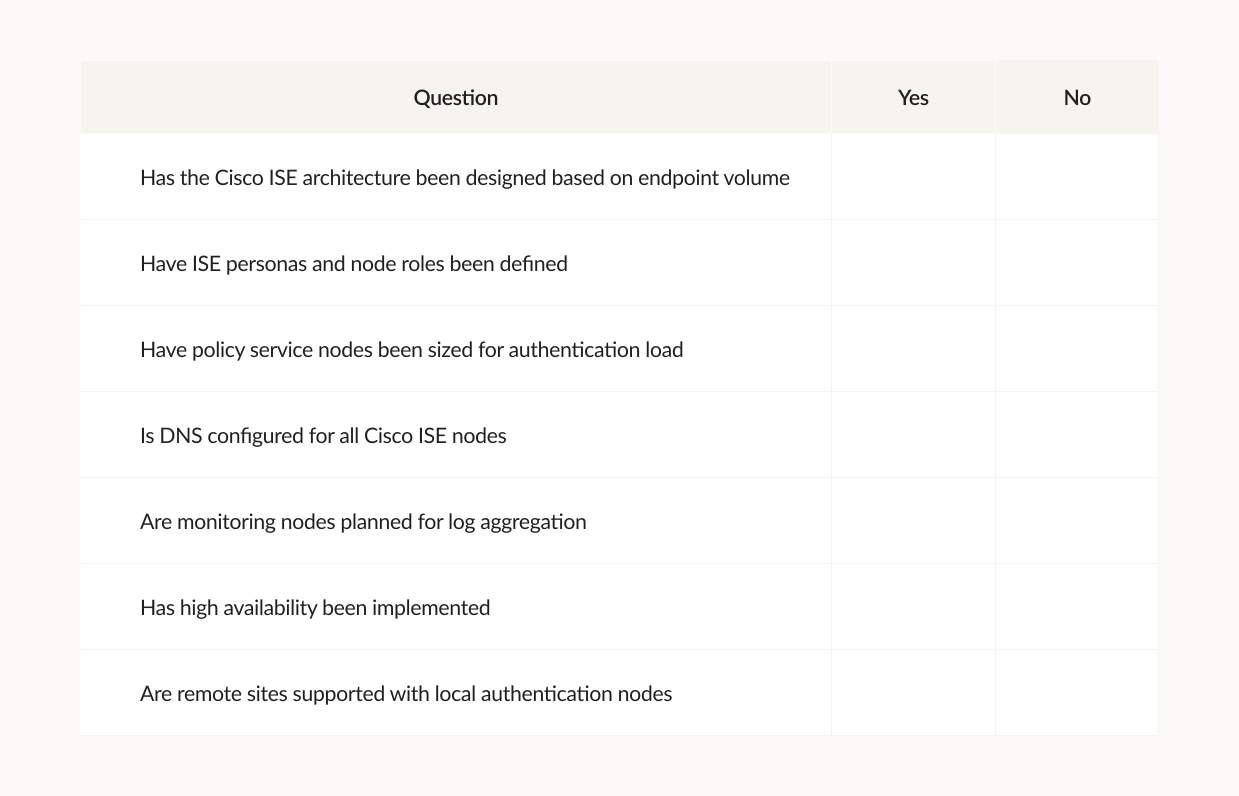
Enterprises that answer yes to most of these questions are typically ready to move forward with Cisco ISE deployment.
If you are in the planning phase, focus on your node sizing and persona distribution. If you are already deployed, audit your exception policies and ensure your software version is current to leverage the latest security patches and AI-driven profiling features.
A successful Cisco ISE deployment is the bridge between traditional connectivity and modern Zero Trust operations. By understanding the roles of different personas and adhering to a phased implementation strategy, enterprise leaders can build a network that is both secure and agile. The complexity of modern infrastructure requires a policy coordination layer that is as scalable as the business itself. Investing in the right architecture today ensures that your organization can defend against tomorrow’s threats.
Explore our latest insights on AI, cybersecurity, and data center innovation. Discover how SecurView delivers scalable, Cisco-integrated solutions for complex enterprise needs.


![[background image] image of an innovation lab (for an ai developer tools).](https://cdn.prod.website-files.com/69835fe30bf38b9637e73850/6a46644a4c169eeeae4a47bd_aaaa.jpg)
![[background image] image of an innovation lab (for an ai developer tools).](https://cdn.prod.website-files.com/69835fe30bf38b9637e73850/6a4660b88fcd6b3708698812_JJ.png)
![[background image] image of an innovation lab (for an ai developer tools).](https://cdn.prod.website-files.com/69835fe30bf38b9637e73850/6a33ca3574b66de6e5d61431_l%20(2).png)